Instrument Two
A performance-orientated accessible drum machine
"The whole process of helping to design the instrument has been so fun and exciting. It's amazing to have an instrument that's personalised to my needs and style of playing."
|
|
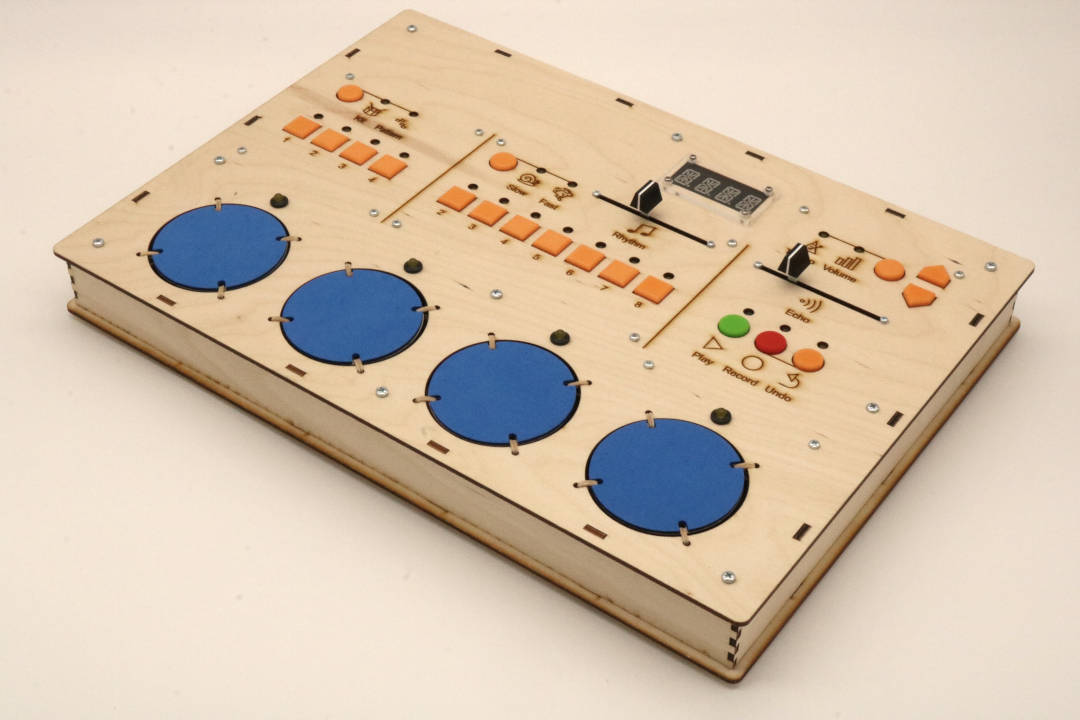
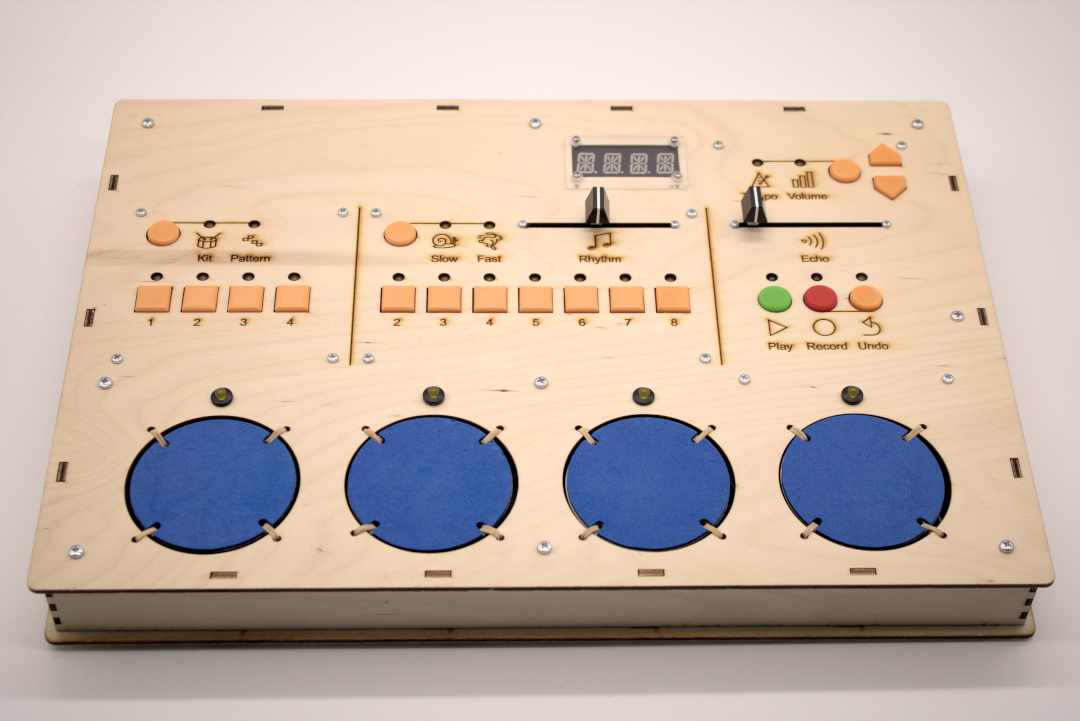
Instrument Two was designed in collaboration with Tim Leathem and the Drake Music Project Northern Ireland. It is a programmable drum machine orientated toward live performance, and designed specially to address the access barriers Tim encounters in music-making. The instrument features four drum pads used to trigger one-shot drum sounds. Tim can use these drum pads to trigger single hits or more complex patterns.
Functionality
|
|
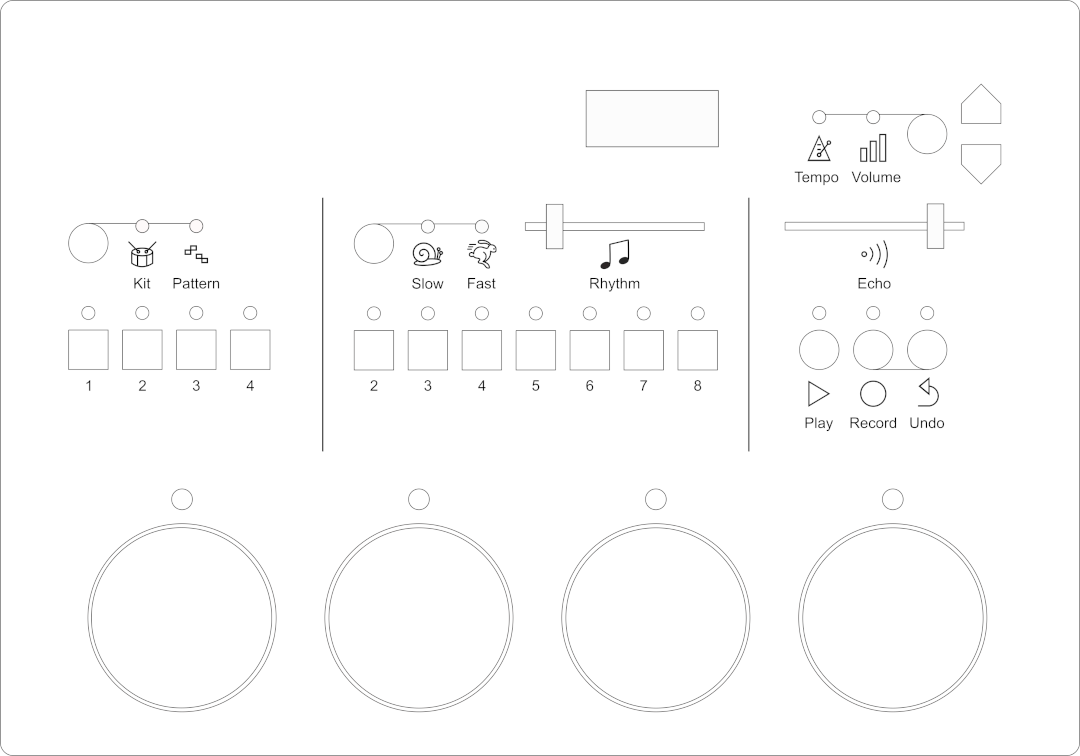
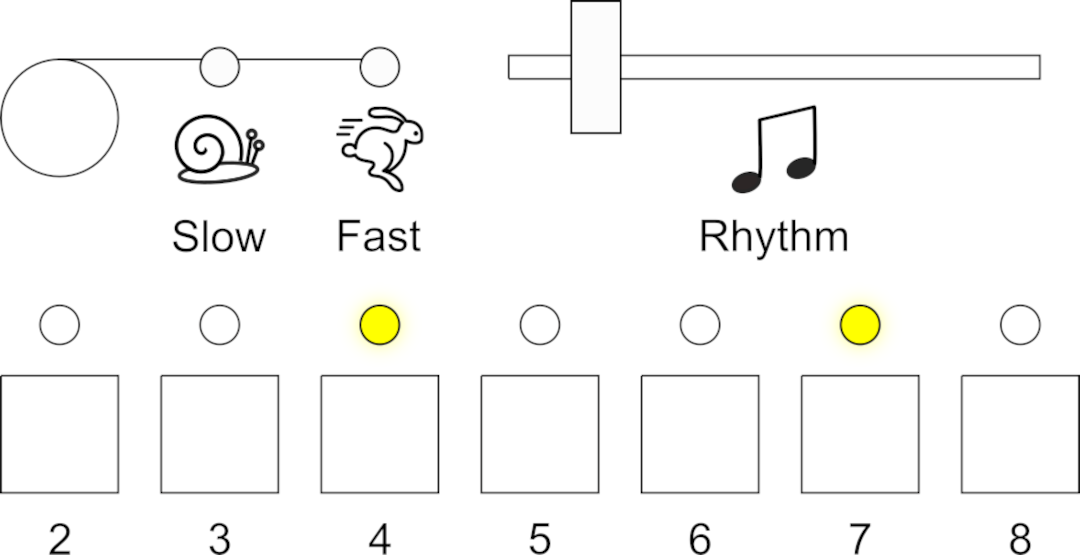
Instrument Two is a sample-based drum machine that features a quantised loop recorder. Recorded drum triggers quantise to the closest demi-semi-quaver (32nd step). The instrument's rhythmic pattern generator makes the creation of complex rhythms more accessible to Tim. He can select one of 127 editable rhythms to trigger when he strikes a drum pad. By default, these rhythms play at the same speed as the master clock. However, the playback rate can be doubled or halved.
Key Features
- Four velocity-sensitive drum pads.
- Four drum kits with eight sounds within each.
- A quantised loop-based trigger recorder.
- Eight pattern slots for recording patterns.
- A rhythmic pattern generator with 127 editable rhythms.
- A tempo-synchronised delay effect.
- 3.5 mm headphone output.
- USB MIDI clock output.
Demonstration
Technical Overview
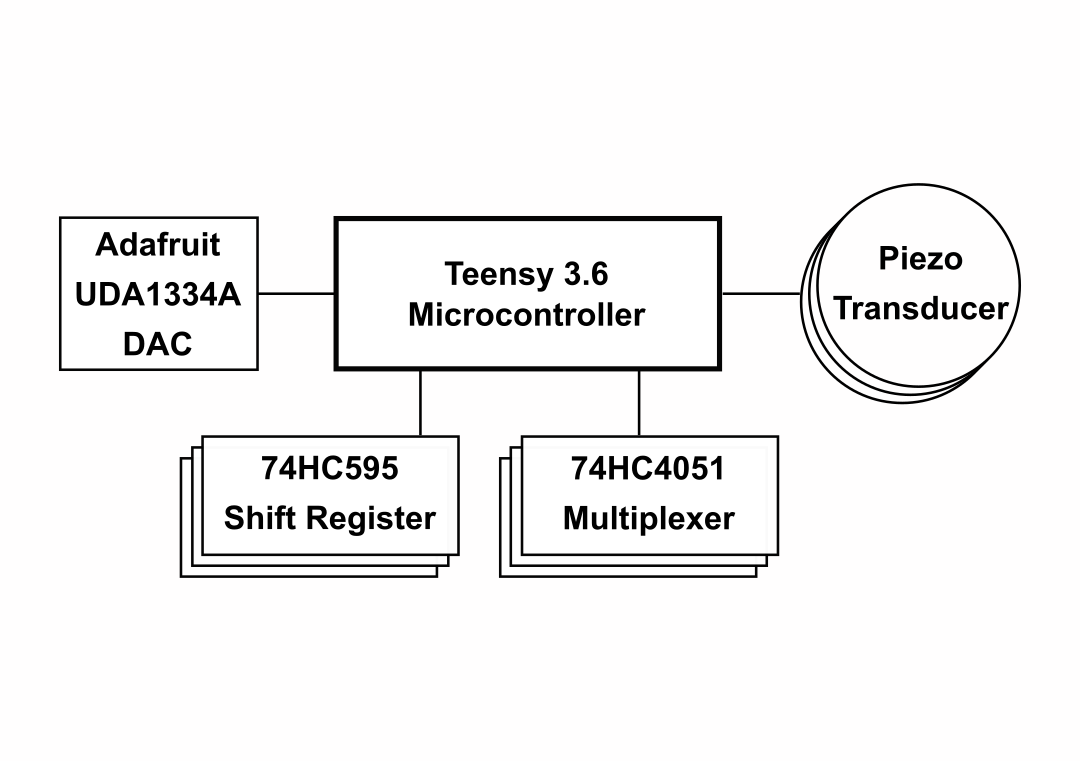
This instrument derives the majority of its functionality from C++ code running on a Teensy 3.6 microcontroller board. The preset rhythms of the rhythmic pattern generator are simply binary representations of integer numbers ranging from 1 to 127.
The Teensy reads drum-sample Wav files from a microSD card connected to its onboard card reader. Digital signal processing functionality comes through the Teensy Audio Library with audio emanating from an Adafruit DAC.
Four piezo transducers act as drum pad sensors. The majority of the remaining interface controls are connected to the Teensy via 74HC4051 multiplexer ICs. LEDs are primarily addressed via daisy-chained 74HC595 shift register ICs.