Instrument One
A guitar-inspired accessible instrument
"Eoin loves his instrument; he gets great satisfaction knowing that he is the one that makes the sounds, which is a first for him."
|
|
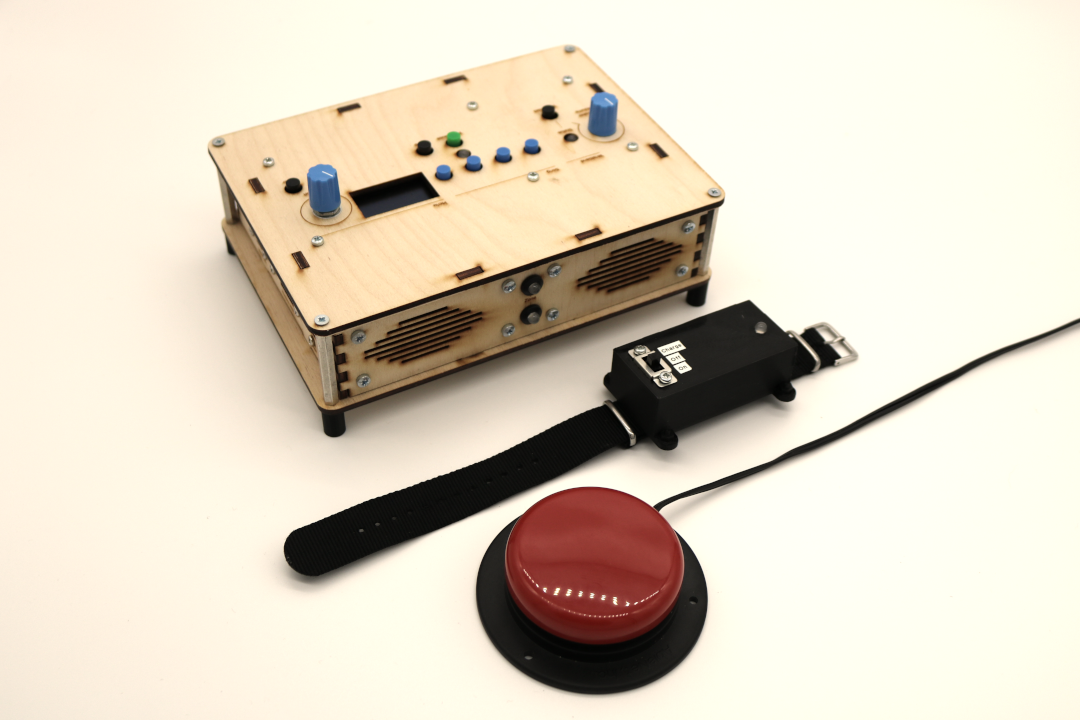
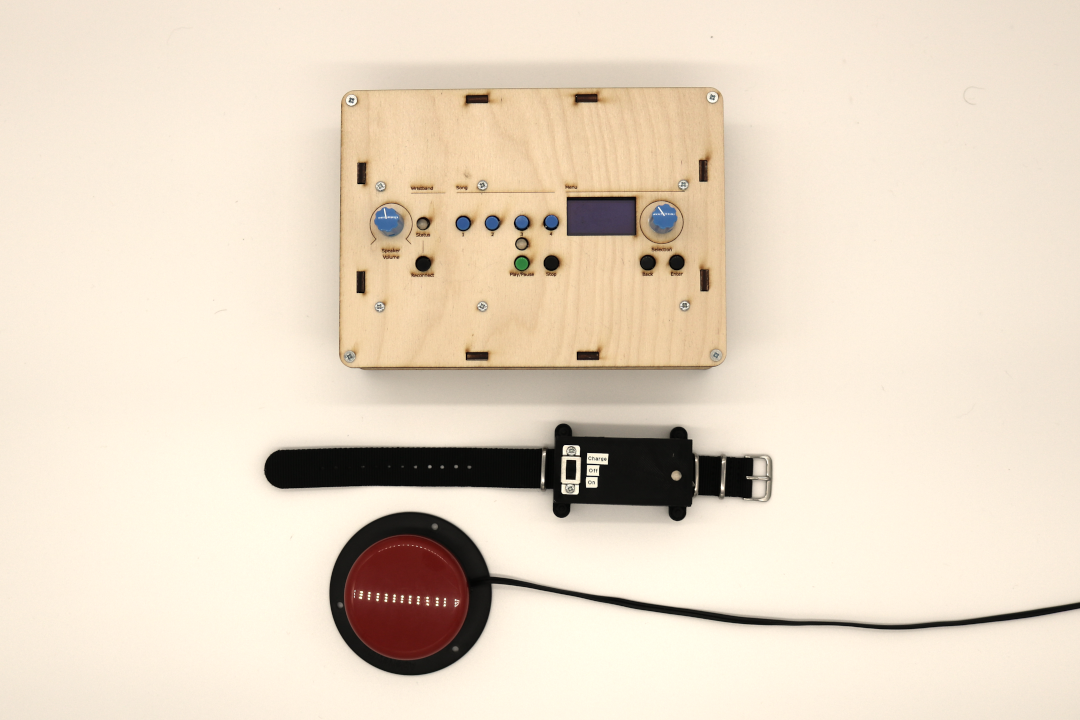
Instrument One was designed in collaboration with physically disabled musician Eoin Fitzpatrick, his father Peter and the Drake Music Project Northern Ireland. It is a novel, guitar-inspired accessible instrument that recreates the experience of selecting chords on a fretboard and strumming guitar strings. It is a novel instrument, tailored towards Eoin's unique requirements.
Functionality
|
|
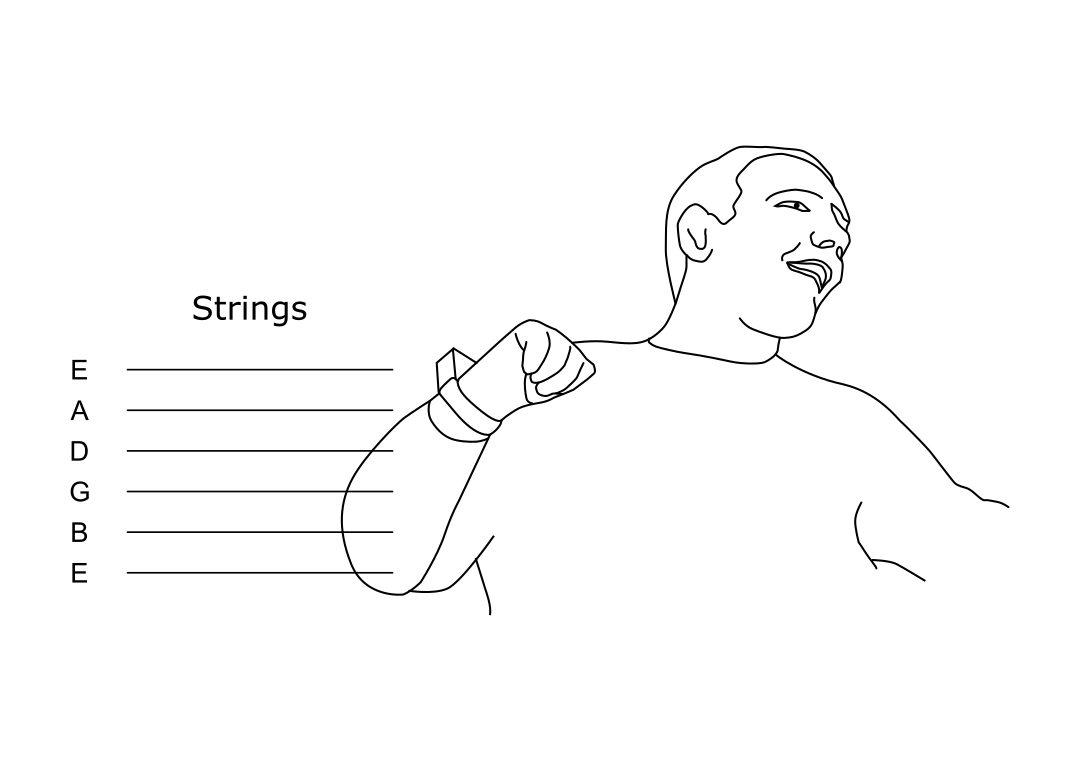
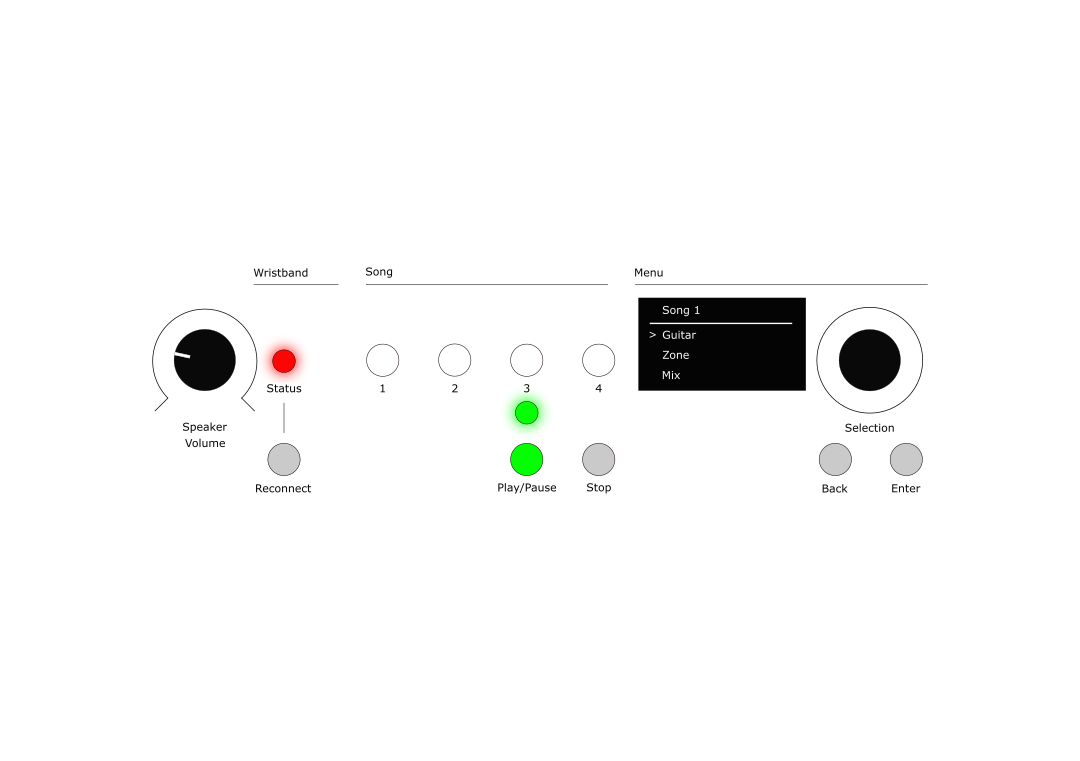
Instrument One uses sample-based synthesis to generate acoustic and electric guitar sounds. It is played by a motion sensor attached to Eoin's wrist. He moves his arm up and down to strum the virtual strings of the guitar. Eoin uses an access switch to select one of three chord or scale quantisation settings. Coloured LEDs at the rear of the instrument indicate the selected chord or scale. The instrument can also play backing tracks loaded on a USB memory stick.
Key Features
- Three guitar tones; hard rock, classic rock and acoustic (steel strung).
- Chord and scale quantisation.
- Support for up to four backing tracks.
- Four configurable song presets.
- 3.5 mm headphone output.
- 2 x 3-watt internal speakers.
- USB MIDI note output.
Demonstration
Technical Overview
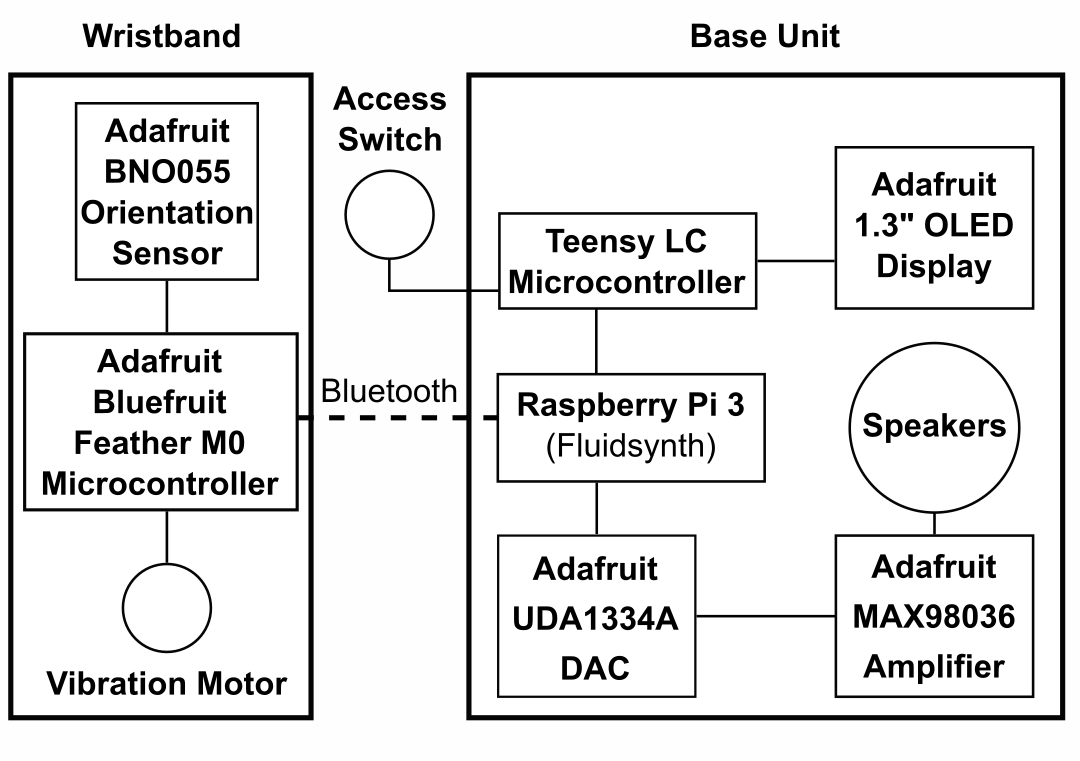
At this instrument's core is a Raspberry Pi 3 (RPi 3) embedded computer that connects to several modular electronic breakout boards. An Adafruit DAC and amplifier provide audio functionality. A Teensy microcontroller board reads input events from the instrument's configuration interface and displays information on the OLED display.
An Adafruit Feather M0 Bluefruit LE provides the majority of functionality required by the wristband. However, an Adafruit BNO055 sensor fusion board provides motion-sensing capabilities.
The RPi 3 runs a python script that handles incoming serial events from the Teensy and Bluetooth data from the Adafruit Feather. Data from the latter is parsed and used to generate note events sent to an instance of pyFluidSynth, which emulates guitar sounds using Soundfont 2 technology.